Workplace Predictions 2026: AI Agents Go Mainstream, GTM Engineers Disappear
Jan 8, 2026

Miriam Partington, senior reporter at Sifted

AI agents become mainstream, new roles emerge and the GTM engineer job dies quietly

[reposted with permission from original Sifted article by Miriam Partington here]

If the workplace of 2025 can be defined by anything, it’s the explosion of AI. 

Companies of all sizes scrambled to figure out how to implement new tools, organise teams and get their head around AI agents. Meanwhile, so-called ‘tiny teams’ — that are able to do far more work and generate more revenue with leaner headcounts — emerged, sending VCs into a tailspin.

As companies reorganised, new roles cropped up like the GTM engineer and the forward deployed engineer — and there was chatter that traditional roles like the head of HR were on their way out.

The “996” debate that ripped through European tech circles on LinkedIn also deserves a brief mention. It raised questions about whether a 72-hour or more work week is really necessary to compete globally, and revealed concerns about how inclusive European tech can really be with companies following this schedule.

So what’s in store for 2026? Sifted asked eight startup operators to give their predictions. 

Marc Jones, CTO, Pleo

Companies decorating their products with AI rather than using it meaningfully will get a wake-up call


In 2026, the organisations that lead won’t be the ones trying to replace people with machines, they’ll be the ones using AI to amplify human judgment. The next wave of competitive advantage will come from teams who understand that AI is a force multiplier for expertise, creativity and decision-making. 

With that shift, the most valuable talent won’t be generic “prompt writers”. They'll be AI quality engineers, reliability specialists and performance experts who can probe a model’s blind spots, harden it against hallucinations and hold it accountable when it is confidently wrong. They will shape the difference between AI that merely exists and AI that can be trusted.

The era of shipping AI prototypes for the sake of novelty is ending. Competitive advantage will now depend on intentional, customer-obsessed application. Embedding AI into a product is meaningless on its own. What matters is whether you deeply understand your customers’ goals — and whether AI makes their experience faster, simpler, smarter and more contextual.

We’re heading into a defining split: companies that use AI to deliver real insight and solve meaningful problems, and companies that simply decorate their products with the phrase “AI-powered.” Customers will know the difference. The market will know the difference. In the end, depth beats noise, insight beats features and quality beats volume every time.

Luke Costley-White, chief growth officer at Dojo AI

GTM engineers will quietly disappear
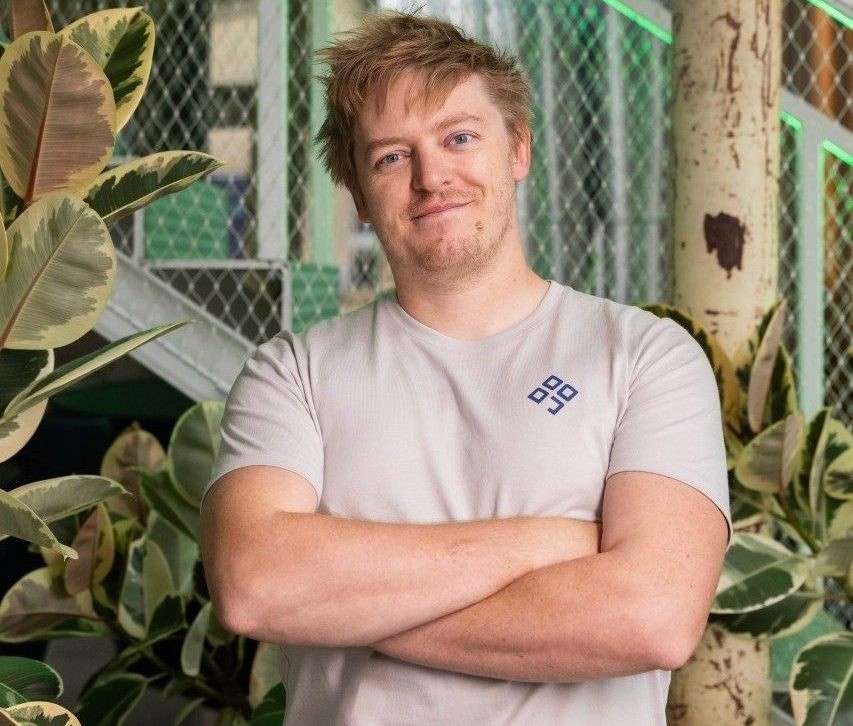

2025 was the year many European startups began hiring for a new role: the GTM (go to market) engineer, which essentially builds systems using AI to help boost revenue across sales, growth and customer success teams. Many founders were convinced the role was going to be critical for startup success in the future — but in 2026, the role is likely to disappear. 

Here's why: GTM engineers were a symptom; not a solution. As B2B markets accelerated and differentiation became harder, companies panicked. If we can't explain what makes us different, maybe we can just reach more people? Cue the lead scraping, data enrichment and automated outreach workflows.

Wrong strategy. If you look at which companies actually won in 2025 — Figma, Notion, Linear — they won because their marketing WAS their product. Using it made you want to sell it.

So what is likely to replace GTM engineers? Tastemakers: marketers who deeply understand their customers, their pain points and where the brand needs to go. AI will handle the manual work like pulling data, building workflows and executing campaigns, while the human will be in charge of delivering insights, innovation, creative concepts and the high-engagement moments AI can't replicate, like podcasts, events and community building.

AI is letting B2B adopt B2C's viral growth while giving B2C B2B's precise attribution. Marketing teams can finally see the full influence of every touchpoint, but only if there's a human with taste guiding what matters.

Olivia Elf, head of operations at Sana 

Employees will start using AI agents daily and companies will restructure around problems, not roles


Last year, everyone said 2025 would be the year of the AI agent, but 2026 will be the year they fully enter the mainstream workplace. Right now, agents operate on what’s often referred to as a ‘jagged reliability frontier’: often remarkable, occasionally illogical, requiring human supervision. It can be like having a drunk management consultant in your pocket: smart but unreliable. But the engineering progress is exceptional, and I expect employees will begin using agents daily as they become more dependable.

Day-to-day, we’ll see far more employees using ‘background assistants’ that triage inboxes, prep meetings, analyse documents and automate follow-ups inside email, calendars and apps. Enterprise tools will also move beyond chat sidebars to native agentic workflows — agents updating CRMs, writing tickets and reconciling data without human prompting. As a result, employees’ interactions with AI will shift from typing prompts to something that simply runs in the background, embedded invisibly in productivity tools and business workflows. 

Lastly, successful companies in 2026 will restructure around problems, not roles. Most organisations have deployed AI either too top-down, as a board-driven initiative, or too bottom-up, at the task layer, when the real leverage happens at a project level. Next year, companies shouldn’t set teams the challenge of adopting AI; they should let them identify the problem they’d like to solve.

Milda Bayer, VP of marketing and new business sales at Lepaya

Video models usher in a new era of advertising and startups hire ‘chief storytellers’


Text-to-visual and text-to-video will finally see a breakthrough. For the first time, brands can produce emotionally strong, cinematic video ads without the historical overhead of shoots, crews, locations and long production cycles. 

Tools like Midjourney play a critical role here. When used well, they allow creative directors and small studios to define mood, texture, light and visual language with a level of precision that used to require entire production teams. Combined with text-to-video systems, this makes high-emotion advertising repeatable. B2C will outpace B2B here because it’s willing to let emotion lead and accept creative risk, while most B2B brands still over-index on explanation and brand safety.

We’ll also see the rise of the chief storyteller and senior comms leadership across industries. AI increases speed and volume, but not trust. As content floods the market, narrative coherence, credibility and relationship-building with journalists and platforms become strategic assets again. Ironically, AI gives more power, not less, to those who can shape meaning.

Alessandro Bonatti, chief people officer at WeRoad

Skills-first hiring will become trendy, HR will converge with IT and AI governance within HR departments will become mandatory


The following trends will gain momentum because they successfully bridge the gap between AI efficiency and human-centric outcomes.

  • Skills-first and ideation-focused hiring is one of the most critical emerging trends. It shifts assessment from credentials on a static CV (which AI can fake) to demonstrations of capability, creativity and drive through ideation projects. The focus moves to imagination rather than just know-how.

  • The HR/IT convergence: as agentic AI requires deep integration across HR, payroll and other systems, the people function will become strategically tied to IT. HR/people leaders will need to build AI fluency and partner with IT to ensure AI adoption is secure, effective and aligned with people-centric goals. The shift is also driving new technical roles within HR, such as people ops engineers, focused on managing complex HR technology, improving employee experience at scale and leveraging analytics.

  • AI governance and trust, risk and security management: As AI deployment deepens, robust governance frameworks will become mandatory. HR will prioritise tools that are transparent, explainable, and auditable to mitigate legal and ethical risks and ensure fair hiring.

Samantha Wessels, president of EMEA at Box 

AI agents will be embedded in every startup’s workflow — or they’ll fall behind their competition


2026 will be the year AI stops being a novelty in the workplace and becomes the operating foundation of competitive startups. The hype of generic copilots and ‘AI for meetings’ tools will fade, while the practical use of agents embedded directly into workflows will become standard.  

To stay relevant, founders will need to shift from being AI-curious to AI-first. The companies pulling ahead are redesigning workflows so agents can actually operate by writing clearer specs, orchestrating multi-step automations, and using the full depth of their unstructured data. Day-to-day startup work will feel very different, with standups, customer notes and sprint plans increasingly generated automatically. Agents will prepare research, monitor pipelines, flag risks and keep documentation up to date without being asked. 

What many still underestimate is that AI won’t simply automate existing jobs; it will raise the bar for them. Startup roles already stretch across functions and, in 2026, they will expand further as agents take on the foundational work beneath the surface. Human judgement becomes the priority, and output expectations for human employees will  rise.

The biggest opportunity for startups in 2026 won’t be efficiency, but unlocking entire categories of work they lacked the resources to do before. To capitalise on this, startups must move from asking “What can AI do for us?” to “What should AI own?” This requires enterprise-grade governance, trusted data pipelines and a willingness to remove human bottlenecks. The winners will treat AI as a true operating layer, delivering ROI that teams can clearly see and freeing people to focus on judgment, customers and impact.

Lukas Saari, CEO and cofounder of Tandem Health

The need for compliance will become greater as AI use increases


People are already using AI at work, whether companies acknowledge it or not. The question for 2026 is whether organisations lead that adoption or let it happen in the shadows. In sectors like healthcare, unregulated AI creates liability risks, trust and patient safety concerns, and this same dynamic will play out across enterprises. This year, across many sectors, employees have increasingly experimented with AI in their work streams. In 2026, we will see increased integration of AI tools in company processes and operational strategy, rather than employees being trusted to figure it out themselves. I expect there to be a greater focus on compliant adoption from the top down rather than the bottom up.

Agur Jõgi, CTO, Pipedrive

The Lovables of the world will face big challenges
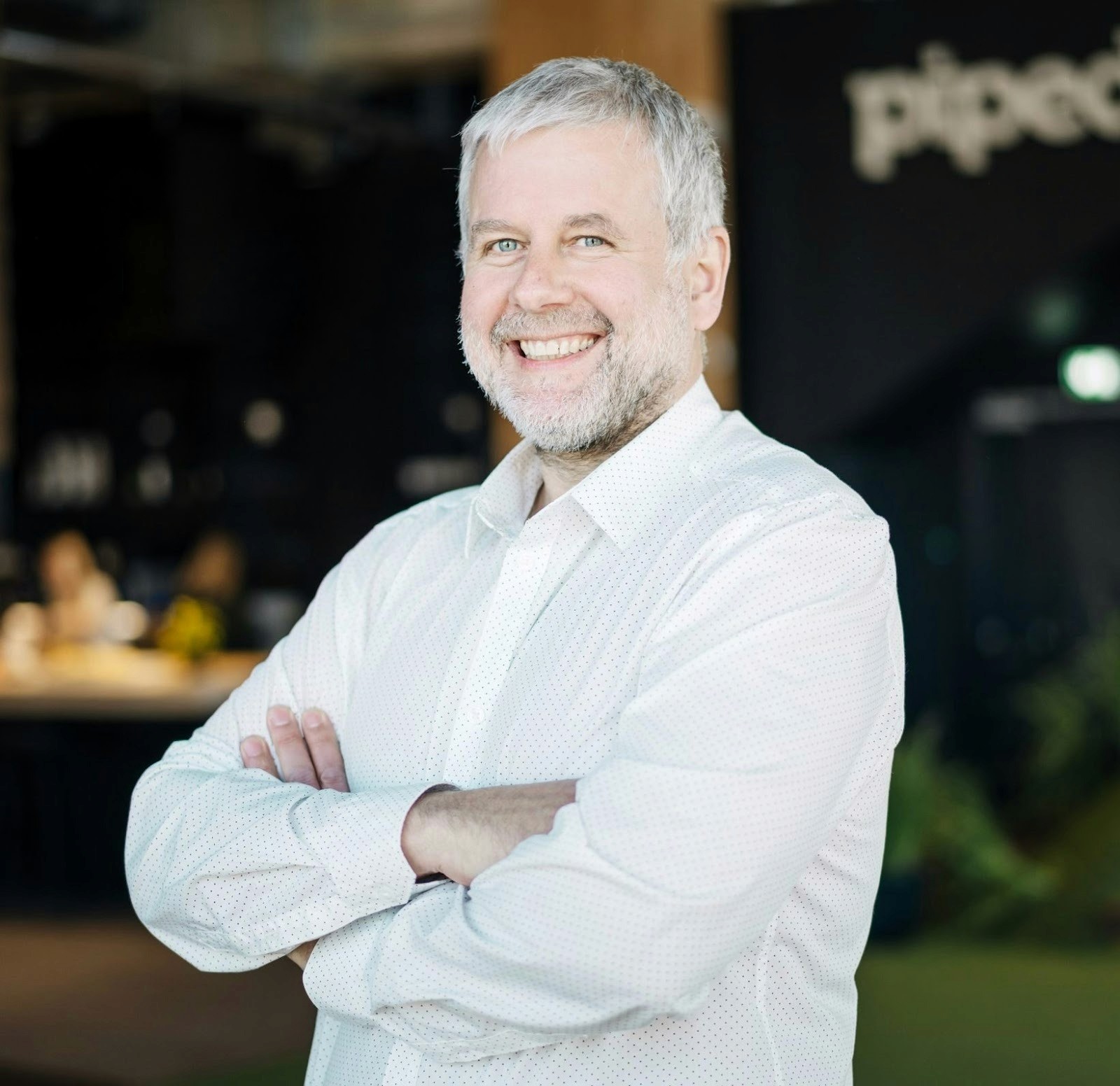

In 2025, we saw how anyone can now build an app using tools like Lovable without any prior development experience. In 2026, we’ll see a rapid increase in the use of such tools — but eventually, two other things will start happening in parallel.

One: employees will use these tools to streamline their daily work (great), but since most of these tools are still in the ‘early day startup’ phase, the reliability, compliance and infosecurity issues that come with them are often nowhere near what established and heavily regulated companies expect.

Two: quite a few of these apps will find great global use, but then it will become clear that their providers are not yet able to actually offer platforms that can handle large global loads, and the apps will start to have unexpected and incomprehensible failures.

These effects might be short-lived, but some of today’s hot names may fall as quickly as they have risen.


Written by Miriam Partington

Miriam Partington is a senior reporter at Sifted, based in Berlin. She covers the DACH region and the future of work, and writes Startup Life , a weekly newsletter on what it takes to build a startup. Follow her on X and LinkedIn

[reposted with permission from original Sifted article by Miriam Partington here]

If the workplace of 2025 can be defined by anything, it’s the explosion of AI. 

Companies of all sizes scrambled to figure out how to implement new tools, organise teams and get their head around AI agents. Meanwhile, so-called ‘tiny teams’ — that are able to do far more work and generate more revenue with leaner headcounts — emerged, sending VCs into a tailspin.

As companies reorganised, new roles cropped up like the GTM engineer and the forward deployed engineer — and there was chatter that traditional roles like the head of HR were on their way out.

The “996” debate that ripped through European tech circles on LinkedIn also deserves a brief mention. It raised questions about whether a 72-hour or more work week is really necessary to compete globally, and revealed concerns about how inclusive European tech can really be with companies following this schedule.

So what’s in store for 2026? Sifted asked eight startup operators to give their predictions. 

Marc Jones, CTO, Pleo

Companies decorating their products with AI rather than using it meaningfully will get a wake-up call


In 2026, the organisations that lead won’t be the ones trying to replace people with machines, they’ll be the ones using AI to amplify human judgment. The next wave of competitive advantage will come from teams who understand that AI is a force multiplier for expertise, creativity and decision-making. 

With that shift, the most valuable talent won’t be generic “prompt writers”. They'll be AI quality engineers, reliability specialists and performance experts who can probe a model’s blind spots, harden it against hallucinations and hold it accountable when it is confidently wrong. They will shape the difference between AI that merely exists and AI that can be trusted.

The era of shipping AI prototypes for the sake of novelty is ending. Competitive advantage will now depend on intentional, customer-obsessed application. Embedding AI into a product is meaningless on its own. What matters is whether you deeply understand your customers’ goals — and whether AI makes their experience faster, simpler, smarter and more contextual.

We’re heading into a defining split: companies that use AI to deliver real insight and solve meaningful problems, and companies that simply decorate their products with the phrase “AI-powered.” Customers will know the difference. The market will know the difference. In the end, depth beats noise, insight beats features and quality beats volume every time.

Luke Costley-White, chief growth officer at Dojo AI

GTM engineers will quietly disappear


2025 was the year many European startups began hiring for a new role: the GTM (go to market) engineer, which essentially builds systems using AI to help boost revenue across sales, growth and customer success teams. Many founders were convinced the role was going to be critical for startup success in the future — but in 2026, the role is likely to disappear. 

Here's why: GTM engineers were a symptom; not a solution. As B2B markets accelerated and differentiation became harder, companies panicked. If we can't explain what makes us different, maybe we can just reach more people? Cue the lead scraping, data enrichment and automated outreach workflows.

Wrong strategy. If you look at which companies actually won in 2025 — Figma, Notion, Linear — they won because their marketing WAS their product. Using it made you want to sell it.

So what is likely to replace GTM engineers? Tastemakers: marketers who deeply understand their customers, their pain points and where the brand needs to go. AI will handle the manual work like pulling data, building workflows and executing campaigns, while the human will be in charge of delivering insights, innovation, creative concepts and the high-engagement moments AI can't replicate, like podcasts, events and community building.

AI is letting B2B adopt B2C's viral growth while giving B2C B2B's precise attribution. Marketing teams can finally see the full influence of every touchpoint, but only if there's a human with taste guiding what matters.

Olivia Elf, head of operations at Sana 

Employees will start using AI agents daily and companies will restructure around problems, not roles


Last year, everyone said 2025 would be the year of the AI agent, but 2026 will be the year they fully enter the mainstream workplace. Right now, agents operate on what’s often referred to as a ‘jagged reliability frontier’: often remarkable, occasionally illogical, requiring human supervision. It can be like having a drunk management consultant in your pocket: smart but unreliable. But the engineering progress is exceptional, and I expect employees will begin using agents daily as they become more dependable.

Day-to-day, we’ll see far more employees using ‘background assistants’ that triage inboxes, prep meetings, analyse documents and automate follow-ups inside email, calendars and apps. Enterprise tools will also move beyond chat sidebars to native agentic workflows — agents updating CRMs, writing tickets and reconciling data without human prompting. As a result, employees’ interactions with AI will shift from typing prompts to something that simply runs in the background, embedded invisibly in productivity tools and business workflows. 

Lastly, successful companies in 2026 will restructure around problems, not roles. Most organisations have deployed AI either too top-down, as a board-driven initiative, or too bottom-up, at the task layer, when the real leverage happens at a project level. Next year, companies shouldn’t set teams the challenge of adopting AI; they should let them identify the problem they’d like to solve.

Milda Bayer, VP of marketing and new business sales at Lepaya

Video models usher in a new era of advertising and startups hire ‘chief storytellers’


Text-to-visual and text-to-video will finally see a breakthrough. For the first time, brands can produce emotionally strong, cinematic video ads without the historical overhead of shoots, crews, locations and long production cycles. 

Tools like Midjourney play a critical role here. When used well, they allow creative directors and small studios to define mood, texture, light and visual language with a level of precision that used to require entire production teams. Combined with text-to-video systems, this makes high-emotion advertising repeatable. B2C will outpace B2B here because it’s willing to let emotion lead and accept creative risk, while most B2B brands still over-index on explanation and brand safety.

We’ll also see the rise of the chief storyteller and senior comms leadership across industries. AI increases speed and volume, but not trust. As content floods the market, narrative coherence, credibility and relationship-building with journalists and platforms become strategic assets again. Ironically, AI gives more power, not less, to those who can shape meaning.

Alessandro Bonatti, chief people officer at WeRoad

Skills-first hiring will become trendy, HR will converge with IT and AI governance within HR departments will become mandatory


The following trends will gain momentum because they successfully bridge the gap between AI efficiency and human-centric outcomes.

  • Skills-first and ideation-focused hiring is one of the most critical emerging trends. It shifts assessment from credentials on a static CV (which AI can fake) to demonstrations of capability, creativity and drive through ideation projects. The focus moves to imagination rather than just know-how.

  • The HR/IT convergence: as agentic AI requires deep integration across HR, payroll and other systems, the people function will become strategically tied to IT. HR/people leaders will need to build AI fluency and partner with IT to ensure AI adoption is secure, effective and aligned with people-centric goals. The shift is also driving new technical roles within HR, such as people ops engineers, focused on managing complex HR technology, improving employee experience at scale and leveraging analytics.

  • AI governance and trust, risk and security management: As AI deployment deepens, robust governance frameworks will become mandatory. HR will prioritise tools that are transparent, explainable, and auditable to mitigate legal and ethical risks and ensure fair hiring.

Samantha Wessels, president of EMEA at Box 

AI agents will be embedded in every startup’s workflow — or they’ll fall behind their competition


2026 will be the year AI stops being a novelty in the workplace and becomes the operating foundation of competitive startups. The hype of generic copilots and ‘AI for meetings’ tools will fade, while the practical use of agents embedded directly into workflows will become standard.  

To stay relevant, founders will need to shift from being AI-curious to AI-first. The companies pulling ahead are redesigning workflows so agents can actually operate by writing clearer specs, orchestrating multi-step automations, and using the full depth of their unstructured data. Day-to-day startup work will feel very different, with standups, customer notes and sprint plans increasingly generated automatically. Agents will prepare research, monitor pipelines, flag risks and keep documentation up to date without being asked. 

What many still underestimate is that AI won’t simply automate existing jobs; it will raise the bar for them. Startup roles already stretch across functions and, in 2026, they will expand further as agents take on the foundational work beneath the surface. Human judgement becomes the priority, and output expectations for human employees will  rise.

The biggest opportunity for startups in 2026 won’t be efficiency, but unlocking entire categories of work they lacked the resources to do before. To capitalise on this, startups must move from asking “What can AI do for us?” to “What should AI own?” This requires enterprise-grade governance, trusted data pipelines and a willingness to remove human bottlenecks. The winners will treat AI as a true operating layer, delivering ROI that teams can clearly see and freeing people to focus on judgment, customers and impact.

Lukas Saari, CEO and cofounder of Tandem Health

The need for compliance will become greater as AI use increases


People are already using AI at work, whether companies acknowledge it or not. The question for 2026 is whether organisations lead that adoption or let it happen in the shadows. In sectors like healthcare, unregulated AI creates liability risks, trust and patient safety concerns, and this same dynamic will play out across enterprises. This year, across many sectors, employees have increasingly experimented with AI in their work streams. In 2026, we will see increased integration of AI tools in company processes and operational strategy, rather than employees being trusted to figure it out themselves. I expect there to be a greater focus on compliant adoption from the top down rather than the bottom up.

Agur Jõgi, CTO, Pipedrive

The Lovables of the world will face big challenges


In 2025, we saw how anyone can now build an app using tools like Lovable without any prior development experience. In 2026, we’ll see a rapid increase in the use of such tools — but eventually, two other things will start happening in parallel.

One: employees will use these tools to streamline their daily work (great), but since most of these tools are still in the ‘early day startup’ phase, the reliability, compliance and infosecurity issues that come with them are often nowhere near what established and heavily regulated companies expect.

Two: quite a few of these apps will find great global use, but then it will become clear that their providers are not yet able to actually offer platforms that can handle large global loads, and the apps will start to have unexpected and incomprehensible failures.

These effects might be short-lived, but some of today’s hot names may fall as quickly as they have risen.


Written by Miriam Partington

Miriam Partington is a senior reporter at Sifted, based in Berlin. She covers the DACH region and the future of work, and writes Startup Life , a weekly newsletter on what it takes to build a startup. Follow her on X and LinkedIn