Beyond Attribution: AI Reveals Marketing-Lead Correlations

Duarte Garrido

Beyond Attribution: How DOJO AI Reveals Hidden Marketing-to-Lead Correlations
混沌の中に秩序を見出す
Finding Order in Chaos

I’ve spent my career watching marketers chase the wrong metrics. We obsess over impressions, clicks, and engagement rates, yet struggle to answer the simplest question: “What actually drives our leads?”

This disconnect isn’t just frustrating - it’s existentially threatening to challenger brands fighting for market share against well-funded competitors. Every misdirected marketing dollar is a missed opportunity to grow.

Last month, I witnessed a transformation that changed how I think about marketing intelligence. Using DOJO AI, we discovered something that undermined everything they thought they knew about their marketing performance.

The Mystery in the Dashboard

It started with a simple screenshot. We uploaded an image of our lead submissions dashboard to DOJO AI, showing a perplexing pattern: 496 qualified leads over 10 months, with wild swings from just 1 lead in October to a staggering 212 in December.
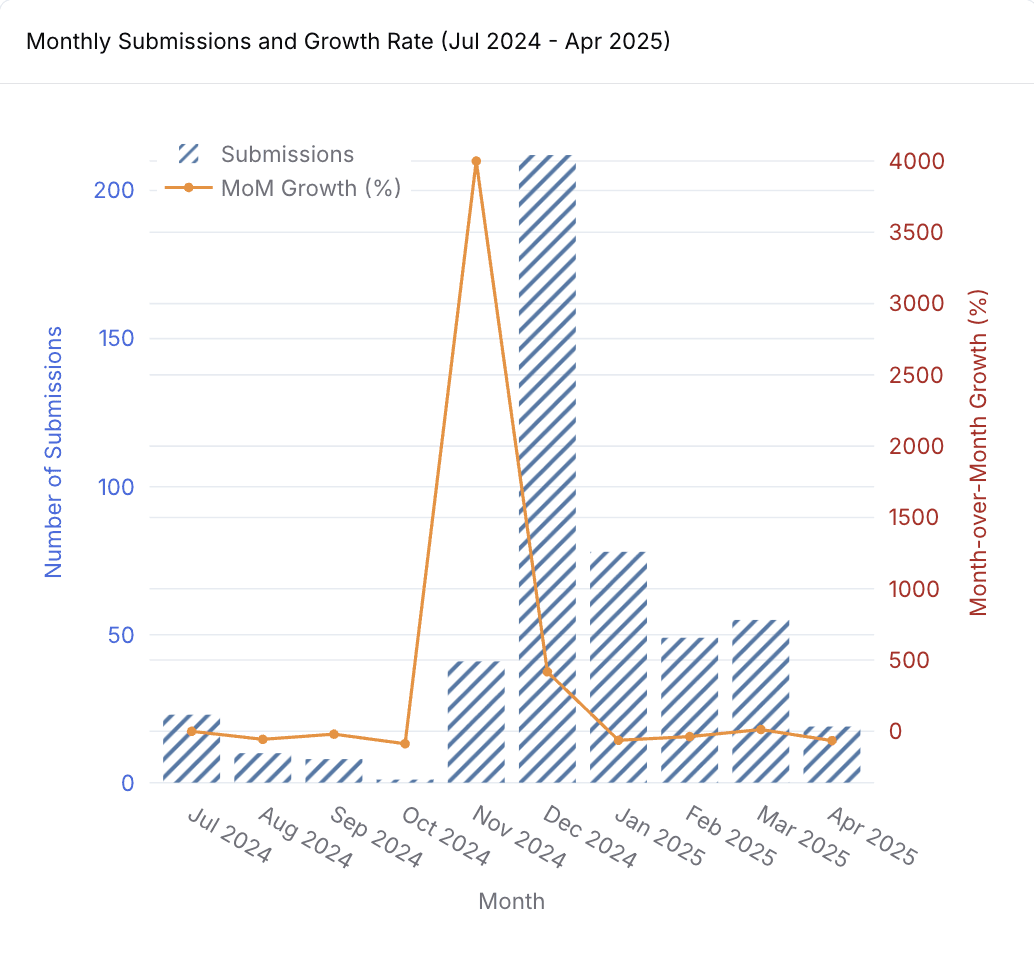
Graphic visual showing Month-On-Month growth

The dashboard revealed other critical details:

  • A clear quality split: 276 high-quality leads (55.6%) vs. 220 lower-quality submissions (44.4%)

  • A dramatic December spike (212 leads, 42.7% of total submissions)

  • A January-March stabilization around 40-78 leads monthly

  • An April decline to just 19 submissions

Our attribution tools offered contradictory explanations for these patterns.

Google Analytics credited most conversions to direct traffic. LinkedIn claimed credit for engagement that led to conversions.

Each platform told a different story, none explaining the dramatic fluctuations.

How DOJO AI Uncovered the Truth

What happened next demonstrates why correlation analysis represents such a fundamental shift in marketing intelligence.

Rather than accepting the dashboard at face value, DOJO AI performed a multi-layered analysis:

  1. Data Integration: The system automatically connected the lead submission data with the brand’s marketing activities across channels - content publication dates, social posts, paid campaigns, and website traffic patterns.

  2. Timeline Alignment: DOJO AI created a unified timeline, aligning marketing activities with lead generation patterns across a sliding time window to account for delayed impact.

  3. Correlation Calculation: The system calculated correlation coefficients between each marketing activity and lead generation, revealing the strength of relationships that attribution tools missed entirely.

  4. Pattern Recognition: DOJO AI identified recurring patterns and theme-based correlations that transcended individual campaigns or touchpoints.
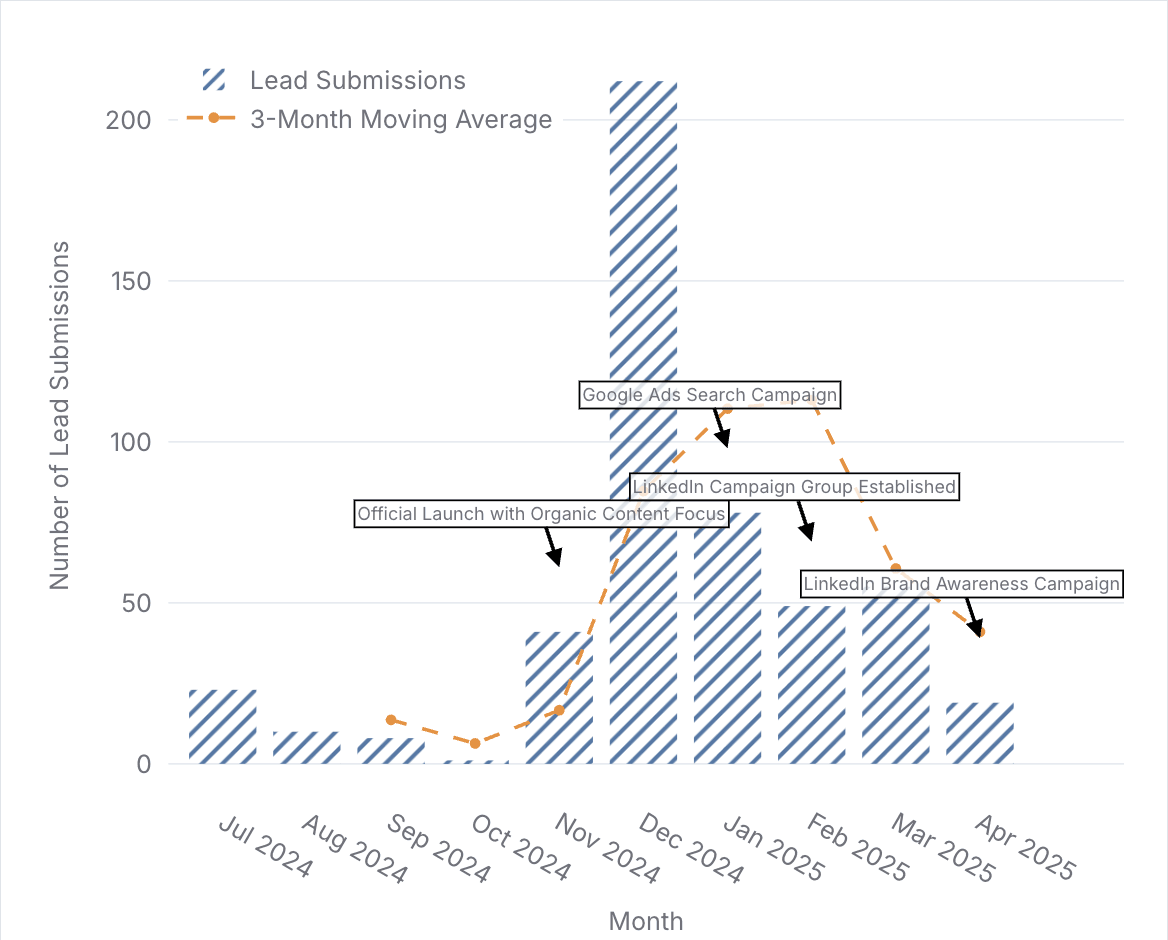
Image bar chart showing correlation between marketing activities and lead gen

This wasn’t a black-box analysis. We could see exactly how DOJO AI reached its conclusions, with visual representations of correlation strength and clear explanations of the relationships discovered.

What DOJO AI Revealed

The results directly contradicted the platforms’ claims:

The December Spike Explanation: While attribution credited various final touchpoints, DOJO AI identified a strong correlation (0.568) with an organic post in November.

The system detected that articles published under the theme “Challenger Brand Positioning” showed the strongest relationship with lead generation - content they had previously considered purely educational with minimal conversion value.

The Google Ads Revelation: Our January Google Ads campaign showed zero tracked conversions in Google’s platform. Yet DOJO AI detected a strong correlation between this campaign and the 78 leads generated that month.

The system identified that leads attributed to “direct” traffic spiked precisely 2-3 days after peaks in Google Ads impressions - a pattern invisible to attribution tools.
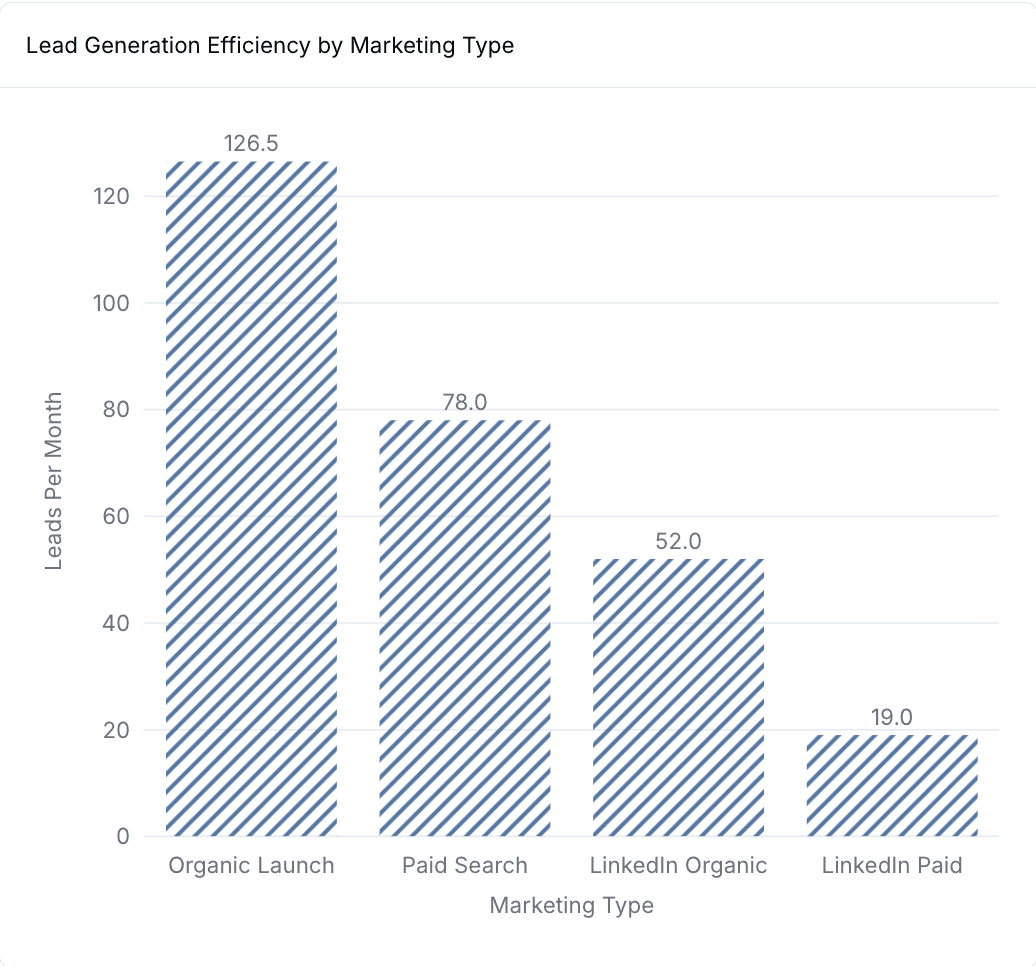
Bar chart showing lead generation efficiency by marketing type

The LinkedIn Insight: Traditional attribution showed minimal direct conversions from organic LinkedIn content. DOJO AI revealed a strong correlation between consistent LinkedIn posting (3+ posts weekly) and lead generation 14-21 days later. The system detected that this relationship strengthened when posts included specific themes aligned with their content strategy.

The Content Theme Pattern: DOJO AI identified which content themes showed the strongest correlation with lead generation, regardless of where conversion was ultimately attributed:

  1. Challenger brand positioning (strongest correlation)

  2. AI marketing transformation (moderate correlation)

  3. Marketing operating system benefits (moderate correlation)

  4. Product features/capabilities (weak correlation)

Bar chart showing cost per lead per channel

From Dashboard to Decision

It could have stopped at interesting observations, but DOJO AI translated these insights into specific actions:

  • Content Calendar Restructuring: The system recommended shifting 60% of content production to high-correlation themes, with specific topic suggestions based on historical performance patterns.

  • Google Ads Optimization: DOJO AI identified the tracking gap and recommended specific implementation fixes, plus campaign optimizations based on the keywords and ad groups showing strongest correlation with lead generation.

  • LinkedIn Strategy Shift: The system recommended reducing paid LinkedIn budget while increasing organic posting frequency, with specific content themes and posting cadence based on correlation patterns.

  • Attribution Recalibration: DOJO AI provided a corrected attribution model that accounted for correlation strength, giving proper credit to channels and activities that traditional attribution undervalued.

The Technical Reality Check

What makes this case particularly interesting is how it exposes the fundamental limitations of traditional attribution.

Attribution tools operate on a flawed premise: that marketing impact follows linear, trackable paths. They require perfect tracking implementation, consistent cross-device identification, and complete visibility into the customer journey - none of which exist in reality.

DOJO AI’s correlation analysis acknowledges this messy reality. Instead of pretending to track perfect paths, it identifies statistical relationships between marketing activities and outcomes, regardless of whether direct tracking exists.

This isn’t just a technical distinction - it’s a fundamental shift in how we understand marketing effectiveness.

A New Marketing Paradigm

This case represents more than just an interesting analytical approach. It symbolizes a new paradigm in marketing intelligence - one where we move beyond simplistic attribution models to understand the complex relationships that drive business results.

This isn’t just a technical evolution. It’s a philosophical shift in how we think about marketing effectiveness. Instead of forcing marketing into linear customer journeys that rarely reflect reality, we embrace the complex, interconnected nature of how marketing actually works.

For challenger brands fighting to compete with limited resources, this shift isn’t just beneficial - it’s essential. The question isn’t whether you’ll make this transition, but whether you’ll do it before your attribution tools lead you further astray.

The future of marketing belongs to those who understand not just what happened, but why it happened. And that future is already here.

Beyond Attribution: AI Reveals Marketing-Lead Correlations

Duarte Garrido

Beyond Attribution: How DOJO AI Reveals Hidden Marketing-to-Lead Correlations
混沌の中に秩序を見出す
Finding Order in Chaos

I’ve spent my career watching marketers chase the wrong metrics. We obsess over impressions, clicks, and engagement rates, yet struggle to answer the simplest question: “What actually drives our leads?”

This disconnect isn’t just frustrating - it’s existentially threatening to challenger brands fighting for market share against well-funded competitors. Every misdirected marketing dollar is a missed opportunity to grow.

Last month, I witnessed a transformation that changed how I think about marketing intelligence. Using DOJO AI, we discovered something that undermined everything they thought they knew about their marketing performance.

The Mystery in the Dashboard

It started with a simple screenshot. We uploaded an image of our lead submissions dashboard to DOJO AI, showing a perplexing pattern: 496 qualified leads over 10 months, with wild swings from just 1 lead in October to a staggering 212 in December.

Graphic visual showing Month-On-Month growth

The dashboard revealed other critical details:

  • A clear quality split: 276 high-quality leads (55.6%) vs. 220 lower-quality submissions (44.4%)

  • A dramatic December spike (212 leads, 42.7% of total submissions)

  • A January-March stabilization around 40-78 leads monthly

  • An April decline to just 19 submissions

Our attribution tools offered contradictory explanations for these patterns.

Google Analytics credited most conversions to direct traffic. LinkedIn claimed credit for engagement that led to conversions.

Each platform told a different story, none explaining the dramatic fluctuations.

How DOJO AI Uncovered the Truth

What happened next demonstrates why correlation analysis represents such a fundamental shift in marketing intelligence.

Rather than accepting the dashboard at face value, DOJO AI performed a multi-layered analysis:

  1. Data Integration: The system automatically connected the lead submission data with the brand’s marketing activities across channels - content publication dates, social posts, paid campaigns, and website traffic patterns.

  2. Timeline Alignment: DOJO AI created a unified timeline, aligning marketing activities with lead generation patterns across a sliding time window to account for delayed impact.

  3. Correlation Calculation: The system calculated correlation coefficients between each marketing activity and lead generation, revealing the strength of relationships that attribution tools missed entirely.

  4. Pattern Recognition: DOJO AI identified recurring patterns and theme-based correlations that transcended individual campaigns or touchpoints.

Image bar chart showing correlation between marketing activities and lead gen

This wasn’t a black-box analysis. We could see exactly how DOJO AI reached its conclusions, with visual representations of correlation strength and clear explanations of the relationships discovered.

What DOJO AI Revealed

The results directly contradicted the platforms’ claims:

The December Spike Explanation: While attribution credited various final touchpoints, DOJO AI identified a strong correlation (0.568) with an organic post in November.

The system detected that articles published under the theme “Challenger Brand Positioning” showed the strongest relationship with lead generation - content they had previously considered purely educational with minimal conversion value.

The Google Ads Revelation: Our January Google Ads campaign showed zero tracked conversions in Google’s platform. Yet DOJO AI detected a strong correlation between this campaign and the 78 leads generated that month.

The system identified that leads attributed to “direct” traffic spiked precisely 2-3 days after peaks in Google Ads impressions - a pattern invisible to attribution tools.

Bar chart showing lead generation efficiency by marketing type

The LinkedIn Insight: Traditional attribution showed minimal direct conversions from organic LinkedIn content. DOJO AI revealed a strong correlation between consistent LinkedIn posting (3+ posts weekly) and lead generation 14-21 days later. The system detected that this relationship strengthened when posts included specific themes aligned with their content strategy.

The Content Theme Pattern: DOJO AI identified which content themes showed the strongest correlation with lead generation, regardless of where conversion was ultimately attributed:

  1. Challenger brand positioning (strongest correlation)

  2. AI marketing transformation (moderate correlation)

  3. Marketing operating system benefits (moderate correlation)

  4. Product features/capabilities (weak correlation)

Bar chart showing cost per lead per channel

From Dashboard to Decision

It could have stopped at interesting observations, but DOJO AI translated these insights into specific actions:

  • Content Calendar Restructuring: The system recommended shifting 60% of content production to high-correlation themes, with specific topic suggestions based on historical performance patterns.

  • Google Ads Optimization: DOJO AI identified the tracking gap and recommended specific implementation fixes, plus campaign optimizations based on the keywords and ad groups showing strongest correlation with lead generation.

  • LinkedIn Strategy Shift: The system recommended reducing paid LinkedIn budget while increasing organic posting frequency, with specific content themes and posting cadence based on correlation patterns.

  • Attribution Recalibration: DOJO AI provided a corrected attribution model that accounted for correlation strength, giving proper credit to channels and activities that traditional attribution undervalued.

The Technical Reality Check

What makes this case particularly interesting is how it exposes the fundamental limitations of traditional attribution.

Attribution tools operate on a flawed premise: that marketing impact follows linear, trackable paths. They require perfect tracking implementation, consistent cross-device identification, and complete visibility into the customer journey - none of which exist in reality.

DOJO AI’s correlation analysis acknowledges this messy reality. Instead of pretending to track perfect paths, it identifies statistical relationships between marketing activities and outcomes, regardless of whether direct tracking exists.

This isn’t just a technical distinction - it’s a fundamental shift in how we understand marketing effectiveness.

A New Marketing Paradigm

This case represents more than just an interesting analytical approach. It symbolizes a new paradigm in marketing intelligence - one where we move beyond simplistic attribution models to understand the complex relationships that drive business results.

This isn’t just a technical evolution. It’s a philosophical shift in how we think about marketing effectiveness. Instead of forcing marketing into linear customer journeys that rarely reflect reality, we embrace the complex, interconnected nature of how marketing actually works.

For challenger brands fighting to compete with limited resources, this shift isn’t just beneficial - it’s essential. The question isn’t whether you’ll make this transition, but whether you’ll do it before your attribution tools lead you further astray.

The future of marketing belongs to those who understand not just what happened, but why it happened. And that future is already here.

Join over 100+ brands
already growing with us.

Join over 100+ brands
already growing with us.

FAQ

Frequently asked questions

Frequently asked questions

What is DOJO AI?

DOJO is an intelligent marketing system that watches every channel continuously, builds a living knowledge graph of your brand's marketing reality, and deploys specialised agents that execute work autonomously before you've had to ask. Not a tool. Not a platform. A system. Every signal your brand produces flows in, every action feeds back, and the system compounds its understanding over time. Most marketing software gives you data. DOJO gives you a system of record, context, and execution: one place where everything is captured, connected, and acted on. Instead of switching between Google Ads, Meta, LinkedIn, GA4, and social dashboards, you get one intelligent system that shows you what's working across all channels - and tells you exactly what to do about it. Specialized AI agents analyze your campaigns 24/7, identify opportunities competitors miss, and help you move faster than companies 10x your size.

Who is DOJO built for?

DOJO is built for marketing teams that want to spend their time on decisions that require human judgment, not on tasks that don't. If your team is stretched across too many channels, too many tools, and too many reports, DOJO replaces the operational burden with a system that runs continuously and arrives with work already done. It's used by in-house marketing teams, agencies managing multiple client accounts, and founders who want the output of a full marketing department without the overhead of one.

Is DOJO suitable for marketing agencies?

Yes. Agencies are one of DOJO's core use cases. The system connects across multiple client accounts, automates reporting and content production, and runs campaign monitoring continuously — so account managers spend time on client relationships and strategy, not on manual tasks that don't require their judgment. DOJO builds a separate knowledge graph for each client, so every recommendation and every piece of content is grounded in that client's actual brand history, not generic best practice.

How does DOJO work with existing tools?

DOJO connects to your existing channels through proprietary connectors and a live web crawler. Google Ads, Meta, LinkedIn, your website, brand mentions, competitor movements — everything flows in automatically, with no manual pulls required. You don't have to replace your stack to use DOJO. The system reads your existing data, connects it, and builds context on top of it. Over time, that context becomes the foundation for every recommendation and every action DOJO takes on your behalf.DOJO builds a separate knowledge graph for each client, so every recommendation and every piece of content is grounded in that client's actual brand history, not generic best practice.

What ROI can I expect?

DOJO customers typically see measurable cost reductions and efficiency gains within the first 90 days, with outcomes compounding as the system builds context over time. Here's what customers have reported: 79% drop in cost per acquisition(Morningstar) 3x conversion volumein the same 23-day window (Morningstar) 40% drop in acquisition costs(Broadvoice) 15x faster marketing reporting(Ozone API) 3x more efficient Google Adsquarter over quarter (Ecologi) 290% increase in content output(Broadvoice) 20 hours saved per month, returned to strategy (Morningstar) The compounding effect matters here. The longer DOJO runs, the more context it builds, and the more precisely it acts. Early results are strong; they get better.

How does DOJO compare to HubSpot, Jasper, or other AI marketing tools?

Most AI marketing tools fall into one of two categories: workflow automation (HubSpot, Marketo, ActiveCampaign) that executes campaigns you set up, or content generation (Jasper, Copy.ai) that produces copy on demand. Both share the same limitation: they start from scratch every session. No memory of your brand history, your previous campaigns, or what your competitors have been doing. DOJO maintains a continuously updated knowledge graph of your entire marketing reality and runs specialised agents that read it daily, surface what needs attention, and execute work before you've asked. The longer DOJO runs, the more precisely it acts — because it compounds what it learns about your specific brand, market, and competitors. If you're evaluating options: Email and workflow automation: HubSpot, Klaviyo, Marketo AI content writing: Jasper, Copy.ai A system that watches every channel, builds brand context, and executes proactively: DOJO

Does AI marketing software actually improve over time, or does it reset every session?

Most AI marketing software resets every session. It has no memory of your brand, your campaigns, or what worked before. Every interaction starts from a blank slate. DOJO works differently. Every signal it captures, every workflow it runs, every recommendation it makes is fed back into the DOJO Graph. The system learns what works for your specific brand, in your specific market, against your specific competitors. It builds institutional knowledge that no other system carries. A team that's been using DOJO for six months has a system that understands their brand history, their campaign patterns, and their market in detail. That depth of context changes what the agents can do. The advantage grows every day the system runs, and it never stops running.

How does DOJO handle data security and privacy?

DOJO is built on enterprise-grade infrastructure with security and data privacy at its core. Your brand data, campaign history, and knowledge graph are kept entirely separate from other customers' data. For detailed information on data handling, storage, and compliance, see our Privacy Policy and Data Processing Agreement, or speak to our team directly when you book a demo.